Michigan's cyclosporiasis outbreak is six times the size of the federal Taco Bell cluster — and its source is still unnamed
Two investigations are running at once and they say different things. Federal investigators have named a lettuce supplier for a 1,947-case cluster. Michigan's own health department, counting 11,234 cases, says it has not identified a source.
There are two cyclosporiasis investigations running in the United States right now, and they are not saying the same thing. Coverage that treats them as one story produces a conclusion neither investigation has reached.
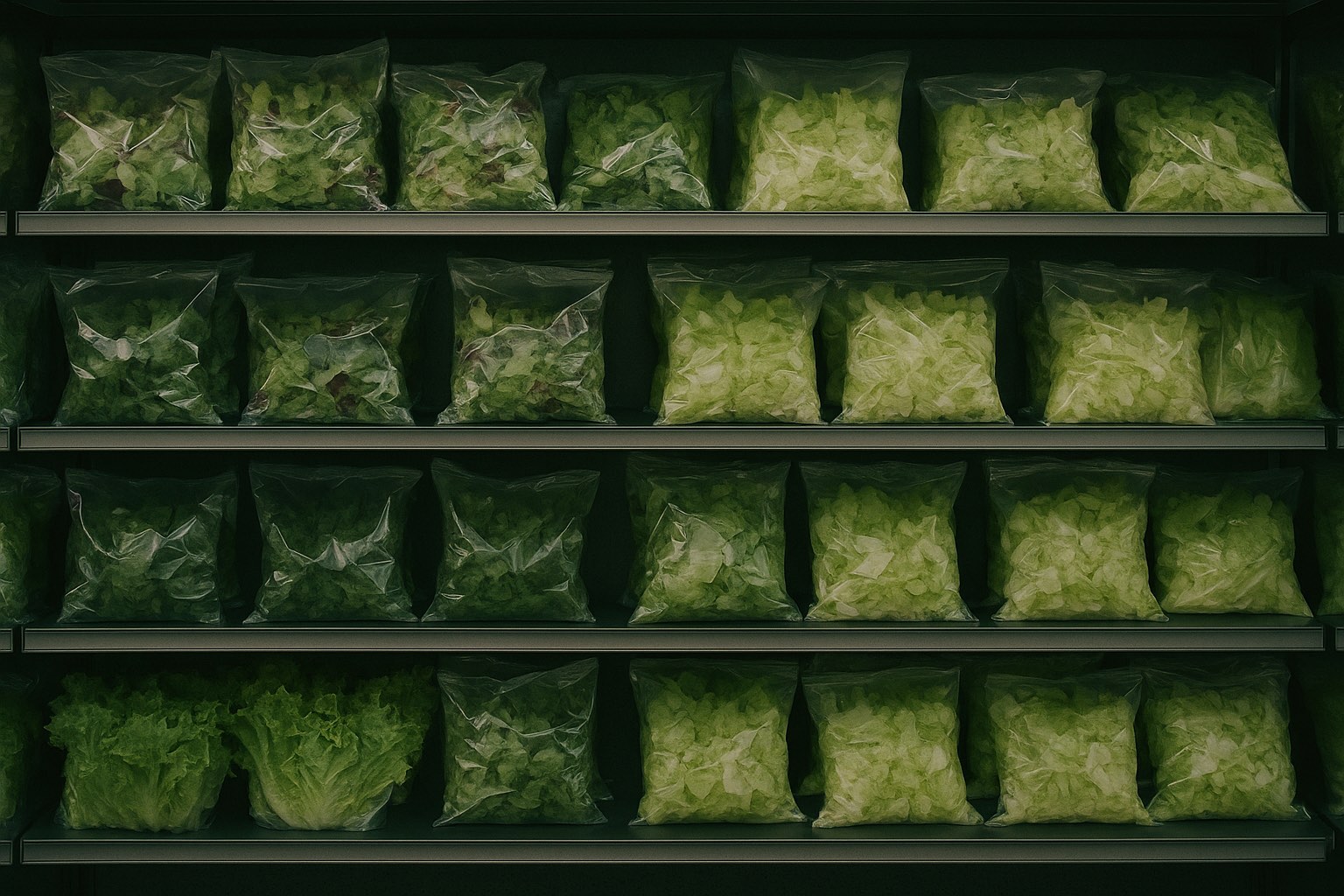
The federal investigation is the one that has named a company. The Centers for Disease Control and Prevention and the Food and Drug Administration have been examining a cluster of 1,947 people across nine states — Illinois, Indiana, Kansas, Kentucky, Michigan, Ohio, Oklahoma, Pennsylvania and West Virginia — who reported eating at Taco Bell. Traceback and interview data pointed to shredded iceberg lettuce grown in central Mexico and supplied by Taylor Farms de Mexico. Around 90 per cent of those interviewed reported eating iceberg lettuce. At least 98 people were hospitalised. Illness onsets run from 22 June to 20 July 2026. On 17 July, Taylor Farms de Mexico voluntarily withdrew all central-Mexico iceberg lettuce from the US market.
The state investigation is much larger and has named nobody. The Michigan Department of Health and Human Services reported 11,234 cases as of 3 August, up from 10,773 on 31 July. That is roughly six times the entire nine-state federal cluster, in one state. It is the largest cyclosporiasis outbreak Michigan has recorded; the state normally identifies around 50 cases in a year. As of 31 July the outbreak had reached 70 of Michigan's 82 counties, and 193 people had been hospitalised as of 30 July.
On the question everyone is searching for — what caused it — MDHHS has not answered. The department says it is still working to identify the direct source and that lettuce or salad greens could be a possible source. Those are two different statements from the ones circulating online, which describe the source as confirmed.
There is a further detail that matters for how firmly the federal link is established. On 18 July the FDA reported that a border surveillance sample of Taylor Farms de Mexico lettuce had tested positive for Cyclospora. On 19 July it withdrew that result, saying laboratory experts had re-reviewed the sample and concluded the finding did not represent true amplification — a false positive. As of that date, no product sample had tested positive for Cyclospora.
The federal case therefore rests on epidemiology and traceback: where sick people ate, what they ate, and where that product came from. That is a legitimate and routine basis for a public-health action, and it is why the voluntary withdrawal stood after the test was retracted. It is not the same as a laboratory result identifying the parasite in the product, and no such result exists.
What connects the two investigations is thin but real. CDC has said it is aware of two cyclosporiasis-related deaths in Michigan among people with underlying health conditions, and counts them as part of the outbreak. MDHHS words it more cautiously: two people with significant underlying health conditions have died and may have been impacted by cyclosporiasis and dehydration. The department also notes that cyclosporiasis is generally not life-threatening and that death from it is uncommon in the United States.
The two counts are not measuring the same thing, and the comparison should be read with that in mind. The federal figure counts only people who reported eating at Taco Bell; Michigan's counts every cyclosporiasis case reported in the state. Michigan is one of the nine states, so some of its cases sit inside the federal cluster as well — neither agency has said how many. What is not explained by either is why one state's total so far exceeds a nine-state cluster tied to a single restaurant chain. Until MDHHS names a source, the honest answer to what is making 11,234 people in Michigan sick is that it has not been established.
Key takeaways
See full context →Two overlapping investigations: a 1,947-case federal cluster with a named supplier, and an 11,234-case Michigan outbreak with no identified source.
Federal figures from CDC and FDA; Michigan figures attributed to MDHHS. The FDA's one positive product test was retracted as a false positive on 19 July.
MDHHS has not identified what is driving the Michigan outbreak, which is roughly six times the size of the federal cluster.
Source map
Explore all sources →✓What we know
- MDHHS reported 11,234 cyclosporiasis cases as of 3 August 2026, against a normal year of about 50.
- 193 people had been hospitalised in Michigan as of 30 July, and the outbreak had reached 70 of 82 counties as of 31 July.
- CDC and FDA linked a separate 1,947-case, nine-state cluster to shredded iceberg lettuce from Taylor Farms de Mexico served at some Taco Bell locations.
- Taylor Farms de Mexico voluntarily withdrew all central-Mexico iceberg lettuce from the US market on 17 July 2026.
- The FDA retracted its only positive product test on 19 July 2026 as a false positive; no product sample has tested positive.
?What remains unclear
See full context- MDHHS has not identified the source of the Michigan outbreak and describes lettuce or salad greens only as a possible source.
- Why Michigan's case count is roughly six times the size of the entire nine-state federal cluster has not been explained.
- How many Michigan cases also fall inside the federal nine-state cluster has not been stated by either agency.
- Whether the two deaths were caused by cyclosporiasis is not established; MDHHS says the two people had significant underlying conditions and may have been impacted by cyclosporiasis and dehydration.
- Whether the Michigan outbreak and the federal Taco Bell cluster share a single cause is not confirmed by either agency.
Every factual claim, and what supports it
Each statement in this article is listed with how it is classified and which of the sources below establish it. A verified fact is corroborated by two or more independent sources; a reported claim rests on fewer, or on a single party’s account.
MDHHS reported 11,234 cyclosporiasis cases as of 3 August 2026.
Figure attributed to MDHHS in reporting dated 3 August 2026.Michigan normally identifies about 50 cyclosporiasis cases per year.
Baseline given by MDHHS and repeated in state reporting.193 Michigan cases had been hospitalised as of 30 July 2026.
Figure attributed to MDHHS.MDHHS has not identified the source and describes lettuce or salad greens as a possible source.
Department wording quoted directly in reporting dated 3 August 2026.The federal nine-state cluster comprises 1,947 people who reported Taco Bell exposure.
CDC epidemiological count for the nine-state cluster.At least 98 people were hospitalised in the federal cluster.
CDC figure for the nine-state cluster.Taylor Farms de Mexico voluntarily withdrew central-Mexico iceberg lettuce from the US market on 17 July 2026.
Announced by the company and recorded in the federal investigation.The FDA retracted its 18 July positive product test on 19 July as a false positive.
FDA said laboratory re-review concluded the finding did not represent true amplification.No product sample has tested positive for Cyclospora.
Stated as of 19 July 2026 following the retraction.Two Michigan deaths are associated with the outbreak in people with significant underlying health conditions.
CDC counts them as outbreak-related; MDHHS says the two may have been impacted by cyclosporiasis and dehydration. The wordings differ and are both reported.The outbreak had reached 70 of Michigan's 82 counties as of 31 July 2026.
County spread attributed to MDHHS.The Michigan and federal counts use different definitions and overlap to an unstated degree.
The federal cluster counts people reporting Taco Bell exposure across nine states including Michigan; MDHHS counts all state cases. Neither agency has published the overlap.
How the story developed
- First illness onsets in the federal cluster; Michigan dates its outbreak from the same day.
- Taylor Farms de Mexico voluntarily withdraws all central-Mexico iceberg lettuce from the US market.
- FDA reports a positive Cyclospora result from a border surveillance sample.
- FDA retracts the result as a false positive; no product sample has tested positive.
- Last illness onset date in the federal cluster.
- 193 Michigan cases hospitalised, per MDHHS.
- Michigan reaches 10,773 cases across 70 of 82 counties.
- MDHHS reports 11,234 cases and two deaths in people with significant underlying conditions.
Why this framing matters
The reliable way to get this story wrong is to merge the two investigations. A federal agency naming a supplier for a 1,947-case cluster is not the same as Michigan's health department explaining an 11,234-case outbreak, and MDHHS has explicitly not done the latter. Several summaries circulating online describe the source of the Michigan outbreak as confirmed. It is not, according to the department counting the cases.
8 sources reviewed
Every source used in this summary, grouped by its role in the reporting chain.
- 1Michigan Department of Health and Human ServicesPrimary · 2026-08-03Primary
- 2ClickOnDetroit (WDIV)Independent · 2026-08-03Independent
- 3Centers for Disease Control and PreventionPrimary · 2026-07Primary
- 4US Food and Drug AdministrationPrimary · 2026-07Primary
- 5CIDRAP, University of MinnesotaIndependent · 2026-07-20Independent
- 6The Detroit NewsIndependent · 2026-07-28Independent
- 7Taylor FarmsPrimary · 2026-07-17Primary
- 8NBC NewsIndependent · 2026-07-20Independent
How we verified this story
MDHHS's own outbreak page and the CDC outbreak page both refused automated retrieval, so state and federal figures are taken from reporting that quotes those agencies directly and each figure is attributed to the agency that issued it, with its as-of date. Where the state and federal wording on the two deaths differs, both are given rather than reconciled. Taylor Farms de Mexico is named because federal investigators named it; its own public statement is included as a source and its voluntary withdrawal is described as voluntary. The retracted false-positive test is reported because it changes what kind of evidence the federal link rests on.
Updates and corrections
Preview page created.
Source context and unresolved questions updated.
Related stories and more context
 BUSINESS
AI capex in 2026: the headline totals range from $630bn to $800bn, and the gap is who gets counted
Published estimates for hyperscaler AI spending this year differ by nearly $200 billion. The disagreement is not about the companies' plans — it is about how many companies are in the set, and which baseline year the growth is measured from.
 SCIENCE
Does El Niño mean more snow? Seasonal outlooks cannot answer that, and here is why
The maps people check for a snow answer measure precipitation, which combines rain and melted snow into one number. They cannot separate the two. That is a built-in limitation of the product, not a gap someone forgot to fill.
 TECHNOLOGY
Will AI take my job? The measured effect is real, narrow, and concentrated on people under 26
The clearest evidence so far comes from payroll records, not forecasts. It shows a 16 per cent relative employment decline for 22- to 25-year-olds in the most exposed occupations — and growth where AI augments the work instead of replacing it.
Join the discussion
Help build a clearer picture. Add context, challenge a claim or share a source.