Bald eagles fledged on San Miguel Island for the first time since the 1950s
Fourteen breeding pairs hatched at least sixteen chicks across Channel Islands National Park this season. The birds vanished from the islands after DDT; the effort to bring them back began in 1980.
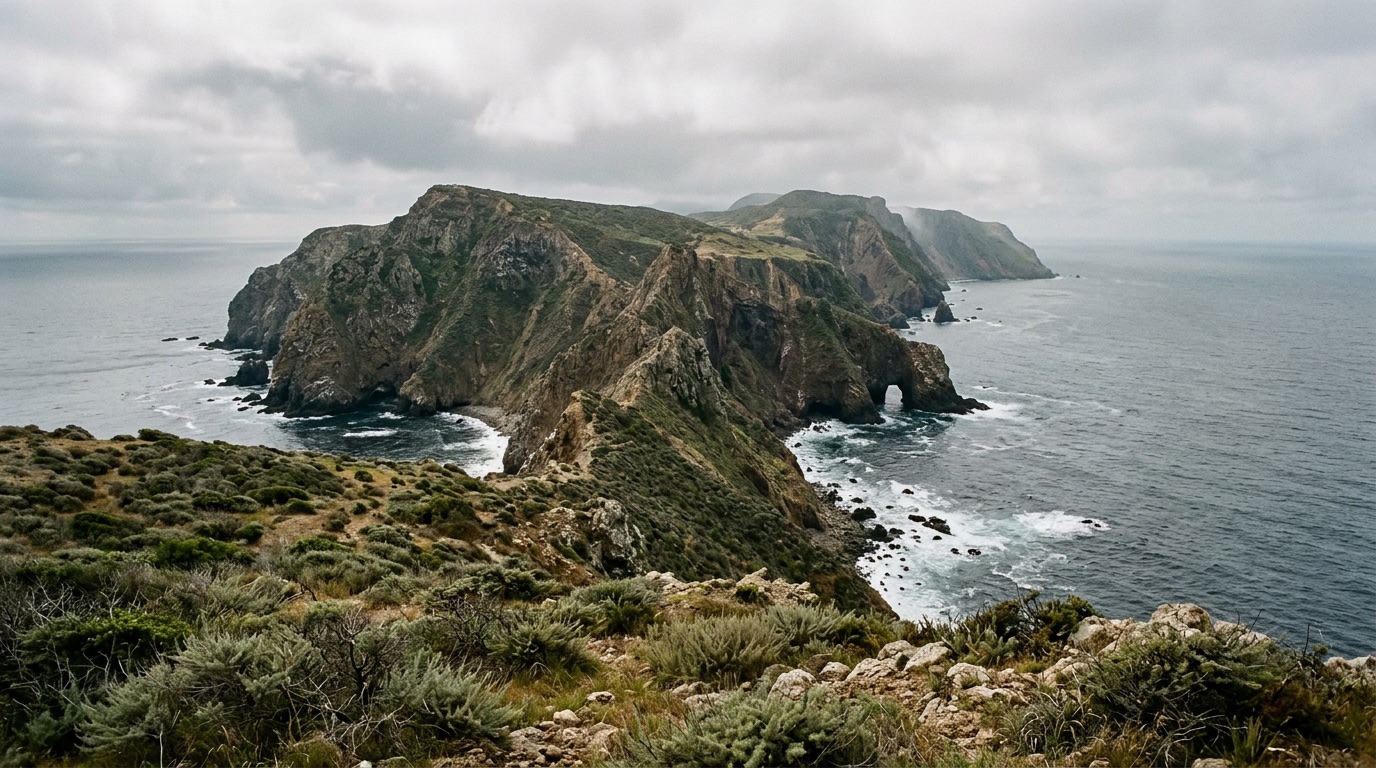
Bald eagles hatched at least sixteen chicks across Channel Islands National Park this season, from fourteen breeding pairs. One of those nests was on San Miguel Island, where chicks fledged successfully for the first time since the early 1950s.
The birds now nest on four of the park's five islands. That is a different sentence from the one that could have been written seventy years ago, when they were gone from the chain entirely.
The cause of the disappearance is well documented and unusually specific. DDT contamination thinned eggshells to the point where they broke under the weight of an incubating adult, and human disturbance around nest sites did the rest. The pesticide reached the marine food web off southern California in quantities that made reproduction effectively impossible for a bird at the top of it.
The restoration effort began in 1980 and has run for more than four decades — long enough that the people who started it were not the people who recorded this season's numbers. The Institute for Wildlife Studies led the project alongside the park and a set of conservation organisations, with Erin Weiner leading the eagle work. The method is unglamorous: monitor nests, track individual birds, protect sites, and wait for a species that raises very few young per year to compound.
The season was not uniformly good. An eaglet in an active nest on Santa Rosa Island did not survive after the Santa Rosa Island Fire burned through part of the Torrey pine forest in May and June. A single loss in a population this small is a measurable event, not a footnote, and it is a reminder that a recovering population remains a fragile one.
Nationally the picture is different in scale. Bald eagles were removed from the endangered species list in 2007 after the population recovered across the continental United States, and there are now several thousand breeding pairs. Delisting did not remove legal protection: the birds remain covered by the Migratory Bird Treaty Act and by the Bald and Golden Eagle Protection Act, which are separate statutes with their own prohibitions.
The threats that remain are mostly mundane and mostly human. Lead poisoning from ammunition fragments in carcasses the birds scavenge, collisions with vehicles, electrocution on power infrastructure, illegal shooting, other contaminants, habitat loss, and disturbance near nests all continue to kill or injure eagles. None of these is a crisis of the kind DDT was. Together they set the ceiling on how far the recovery goes.
What the Channel Islands number does not tell you is whether it holds. One strong season in a small island population is a data point, and island populations are precisely the ones where a fire, a storm or a contaminant event can undo several years of progress at once.
Key takeaways
See full context →Fourteen breeding pairs hatched at least sixteen chicks in Channel Islands National Park, with a first fledging on San Miguel since the early 1950s.
The season figures come from the National Park Service's own release, with federal wildlife agencies for status and protections.
Lead, collisions, electrocution and fire still limit the recovery; a single season does not establish a trend.
Source map
Explore all sources →✓What we know
- Fourteen breeding pairs nested and at least sixteen chicks hatched across the park in 2026.
- Chicks fledged on San Miguel Island for the first time since the early 1950s.
- Eagles now nest on four of the park's five islands.
- The birds disappeared from the islands because of DDT contamination and human disturbance; restoration began in 1980.
- Bald eagles were delisted in 2007 but remain protected by two separate federal statutes.
?What remains unclear
See full context- Whether this season's figures represent a durable trend or a single good year is not established.
- The park release gives no comparable figures for previous seasons, so the rate of change cannot be read from it.
- The long-term effect of the Santa Rosa Island Fire on nesting habitat is not yet assessed.
Every factual claim, and what supports it
Each statement in this article is listed with how it is classified and which of the sources below establish it. A verified fact is corroborated by two or more independent sources; a reported claim rests on fewer, or on a single party’s account.
Fourteen breeding pairs hatched at least sixteen chicks in Channel Islands National Park in 2026.
Figures published by the National Park Service, the agency that conducts the monitoring. Authoritative but single-sourced, so labelled as reported rather than independently verified.Chicks fledged on San Miguel Island for the first time since the early 1950s.
Stated in the park's release.Bald eagles now nest on four of the park's five islands.
Stated in the park's release.DDT contamination and human disturbance caused the original disappearance.
Given by the park service and corroborated by federal environmental material.Restoration on the islands began in 1980 and has continued for more than four decades.
Timeline from the park's release.The Institute for Wildlife Studies led the project, with Erin Weiner leading the eagle work.
Named in the release.An eaglet was lost on Santa Rosa Island after a fire burned part of the Torrey pine forest.
Recorded in the same release.The species was delisted in 2007 but remains protected under two other federal statutes.
Federal wildlife and environmental agency references.Lead poisoning, collisions, electrocution and disturbance continue to kill or injure eagles.
Threat list from a conservation organisation and the federal species profile.One strong season in a small island population does not establish a trend.
An editorial caution; the release provides no comparative series.
How the story developed
- Bald eagles disappear from the Channel Islands amid DDT contamination and disturbance.
- Restoration work on the islands begins.
- The species is removed from the endangered species list nationally.
- The Santa Rosa Island Fire burns part of the Torrey pine forest; an eaglet is lost.
- Fourteen pairs hatch at least sixteen chicks; San Miguel Island records its first fledging since the early 1950s.
Why this framing matters
Recovery stories are usually written as conclusions. This one is a season's figures from a small island population, published by the agency that manages it, and the same release records a loss. Presenting both is the difference between reporting a recovery and announcing one.
5 sources reviewed
Every source used in this summary, grouped by its role in the reporting chain.
- 1U.S. National Park ServicePrimary · 2026Primary
- 2U.S. Fish & Wildlife ServicePrimary · 2026Primary
- 3U.S. Environmental Protection AgencyIndependent · 2026Independent
- 4Defenders of WildlifeIndependent · 2026Independent
- 5Smithsonian's National Zoo and Conservation Biology InstituteBackground · 2026Background
How we verified this story
Built on the National Park Service's own release for the 2026 season, which was retrieved and read directly and is the source of every figure specific to the Channel Islands. Federal wildlife and environmental agency references supply the national status, the delisting date and the statutes that still apply; a conservation organisation reference supplies the list of continuing threats. Works of the United States government are in the public domain. No independent count of the season was available, and the release gives no prior-year figures, which the article states rather than filling in.
Updates and corrections
Preview page created.
Source context and unresolved questions updated.
Related stories and more context
 BUSINESS
AI capex in 2026: the headline totals range from $630bn to $800bn, and the gap is who gets counted
Published estimates for hyperscaler AI spending this year differ by nearly $200 billion. The disagreement is not about the companies' plans — it is about how many companies are in the set, and which baseline year the growth is measured from.
 SCIENCE
Does El Niño mean more snow? Seasonal outlooks cannot answer that, and here is why
The maps people check for a snow answer measure precipitation, which combines rain and melted snow into one number. They cannot separate the two. That is a built-in limitation of the product, not a gap someone forgot to fill.
 TECHNOLOGY
Will AI take my job? The measured effect is real, narrow, and concentrated on people under 26
The clearest evidence so far comes from payroll records, not forecasts. It shows a 16 per cent relative employment decline for 22- to 25-year-olds in the most exposed occupations — and growth where AI augments the work instead of replacing it.
Join the discussion
Help build a clearer picture. Add context, challenge a claim or share a source.