There is no confirmed list of the Walgreens stores closing in 2026
Walgreens has not published an updated closure target since going private, and has not confirmed any nationwide list. The figures circulating — fewer than 100, or about 700 — trace to reporting that cites no company document or named source.
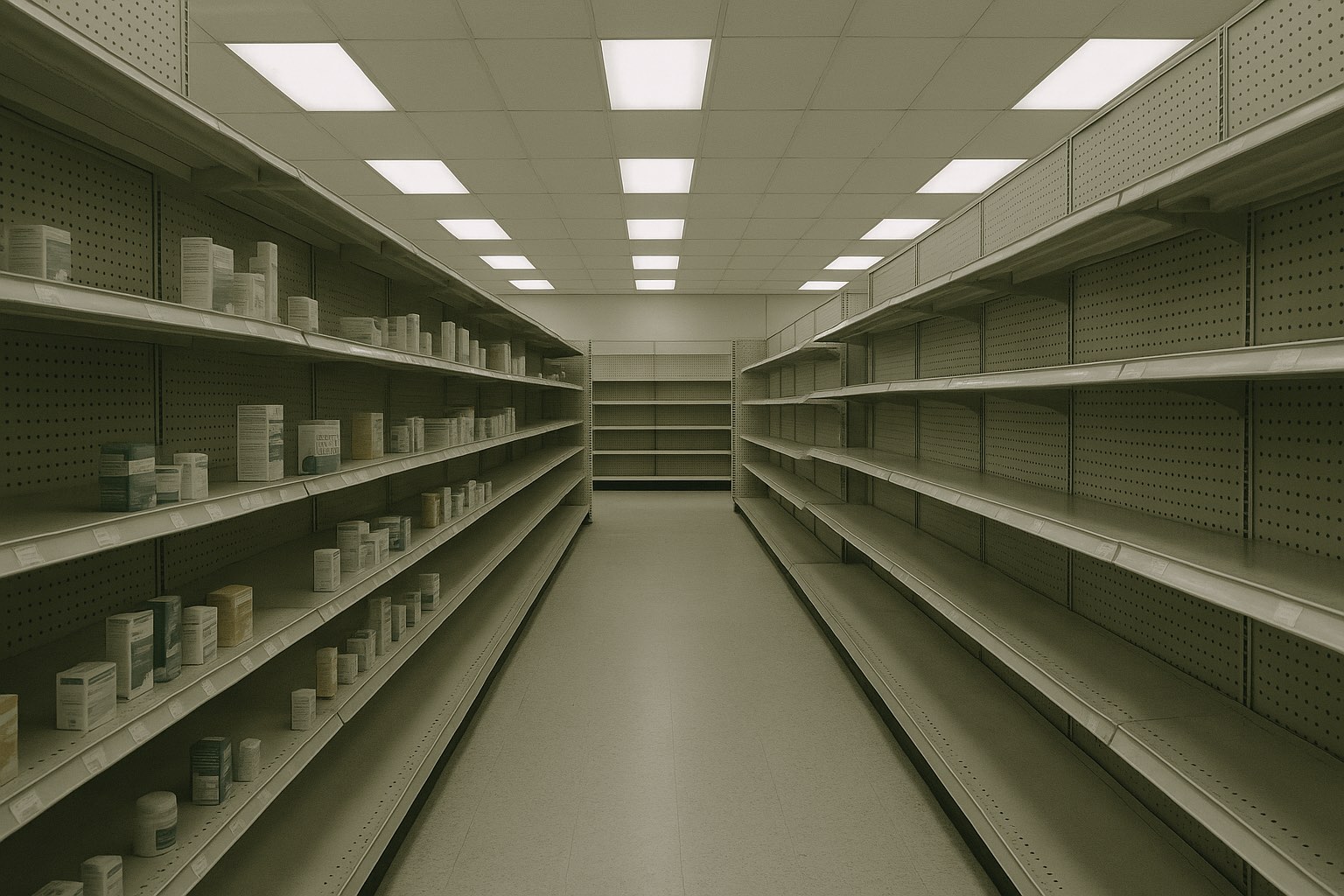
The most-searched question about Walgreens this week is which specific stores are closing in 2026. The answer available from the company is that it has not said.
That is worth stating plainly, because a large amount of material presenting itself as the closure list is in circulation. None of it is confirmed by Walgreens, and the company has not published an updated nationwide closure target since its ownership changed.
Here is what is on the record. On 15 October 2024, Walgreens Boots Alliance announced alongside its fiscal fourth-quarter results that it intended to close about 1,200 stores over three years, with roughly 500 of those in the following twelve months. The company said at the time that about a quarter of its roughly 8,700 US locations were unprofitable. Then chief executive Tim Wentworth described a turnaround that would take time.
That plan was announced under different ownership. In August 2025 the company was taken private by Sycamore Partners, in partnership with Stefano Pessina and his family. Mike Motz is chief executive; John Lederer is executive chairman. The US footprint now stands at approximately 8,000 locations.
What the new owners intend is where the record stops. Reporting has put the 2026 closure figure at fewer than 100 stores, down from earlier internal projections of around 700. Neither figure has been confirmed by Walgreens, and the reporting that carried them did not identify a named source, a company document or a statement. Both numbers are being repeated widely as though they were announcements. They are not.
Lists of individual closing stores are in the same position. One compiled list identifies eleven stores across ten states and the District of Columbia — California, Florida, Illinois, Missouri, New York, South Carolina, Virginia, Washington, Wisconsin and Washington DC. That list was assembled from local reporting and public notices. It has not been confirmed by the company, and it has not been described as exhaustive by anyone, including the people who compiled it. Illinois has the largest number of individually confirmed 2026 closures at four.
Separately, and confirmed, Walgreens closed a 500,000-square-foot distribution centre near George Bush Intercontinental Airport in Houston, resulting in 159 layoffs, and consolidated those deliveries through a facility in Waxahachie, Texas. Distribution changes are disclosed through layoff notices in a way that individual store closures are not, which is why that number is firm while the store count is not.
The practical consequence for anyone trying to find out whether a particular store is closing: the reliable signal is not a national list. It is the notice posted in that store, the prescription-transfer letter sent to its patients, and the local reporting that follows both. Those arrive store by store, usually a few weeks ahead.
Open News will update this article if Walgreens publishes a closure target or a confirmed list.
Key takeaways
See full context →Walgreens has not published a 2026 closure target or a confirmed store list since going private in August 2025.
The October 2024 plan of 1,200 stores over three years is on the record. The 2026 figures now circulating are not company statements.
Individual closures surface through in-store notices, prescription-transfer letters and local reporting, not a national list.
Source map
Explore all sources →✓What we know
- On 15 October 2024 Walgreens Boots Alliance announced plans to close about 1,200 stores over three years, roughly 500 within twelve months.
- The company said about a quarter of its roughly 8,700 US stores were unprofitable at that time.
- Sycamore Partners took the company private in August 2025 in partnership with Stefano Pessina and his family.
- The current US footprint is approximately 8,000 locations.
- Walgreens closed a 500,000-square-foot Houston-area distribution centre with 159 layoffs, consolidating into Waxahachie, Texas.
?What remains unclear
See full context- Walgreens has not publicly issued an updated nationwide closure target since the ownership change.
- The figures of fewer than 100 and about 700 closures for 2026 are not attributed to any named source, company document or statement.
- No published list of 2026 closures has been confirmed by the company or described as exhaustive.
- How many stores will close in 2026 in total is not established.
Every factual claim, and what supports it
Each statement in this article is listed with how it is classified and which of the sources below establish it. A verified fact is corroborated by two or more independent sources; a reported claim rests on fewer, or on a single party’s account.
On 15 October 2024 Walgreens announced plans to close about 1,200 stores over three years.
Announced by the company with its fiscal fourth-quarter results and reported the same day by multiple outlets.About 500 of those closures were planned within the following twelve months.
Stated in the same company announcement.Walgreens estimated a quarter of its roughly 8,700 US stores were unprofitable.
Company estimate given at the October 2024 announcement.Sycamore Partners took Walgreens private in August 2025 with Stefano Pessina and his family.
Ownership and current leadership recorded in reporting dated 4 August 2026.The current US footprint is approximately 8,000 locations.
Figure attributed to the company.Walgreens has not publicly issued an updated nationwide closure target.
Stated directly in reporting dated 4 August 2026.The reported 2026 figures of fewer than 100 and about 700 closures are not supported by a named source, company document or statement.
The reporting reviewing those figures states that no such source was identified.A compiled list identifies eleven 2026 closures across ten states and Washington DC, and is not confirmed by Walgreens.
Described as compiled, not confirmed by the company and not stated to be exhaustive.Walgreens closed a 500,000-square-foot Houston-area distribution centre with 159 layoffs.
Closure and layoff count reported with consolidation into Waxahachie, Texas.
How the story developed
- Walgreens Boots Alliance announces about 1,200 closures over three years alongside fiscal Q4 results.
- Sycamore Partners takes the company private with Stefano Pessina and family.
- Closures continue across at least a dozen states; no updated national target is published.
- Reported 2026 figures remain unconfirmed by the company.
Why this framing matters
This story is unusual in that the newsworthy fact is an absence. A very large search volume is directed at a list that does not exist in confirmed form, and that gap is being filled by compiled lists and unattributed numbers presented with the confidence of announcements. Reporting the absence accurately is more useful to a reader checking on their own pharmacy than repeating a list nobody stands behind.
5 sources reviewed
Every source used in this summary, grouped by its role in the reporting chain.
- 1The Washington TimesPrimary · 2026-08-04Primary
- 2NBC NewsIndependent · 2024-10-15Independent
- 3CBS NewsIndependent · 2024-10-15Independent
- 4NewsweekIndependent · 2026Independent
- 5Inc.Independent · 2026Independent
How we verified this story
The October 2024 plan is taken from contemporaneous reporting of the company's own fiscal fourth-quarter announcement, where the figures were stated by the company. The 2026 figures are reported as claims and explicitly attributed to the outlets carrying them, with a note that no named source or company document was identified — that attribution gap is the point of the article rather than an incidental caveat. The distribution-centre closure is stated as confirmed because layoff numbers of that kind are disclosed through statutory notice.
Updates and corrections
Preview page created.
Source context and unresolved questions updated.
Related stories and more context
 BUSINESS
AI capex in 2026: the headline totals range from $630bn to $800bn, and the gap is who gets counted
Published estimates for hyperscaler AI spending this year differ by nearly $200 billion. The disagreement is not about the companies' plans — it is about how many companies are in the set, and which baseline year the growth is measured from.
 SCIENCE
Does El Niño mean more snow? Seasonal outlooks cannot answer that, and here is why
The maps people check for a snow answer measure precipitation, which combines rain and melted snow into one number. They cannot separate the two. That is a built-in limitation of the product, not a gap someone forgot to fill.
 TECHNOLOGY
Will AI take my job? The measured effect is real, narrow, and concentrated on people under 26
The clearest evidence so far comes from payroll records, not forecasts. It shows a 16 per cent relative employment decline for 22- to 25-year-olds in the most exposed occupations — and growth where AI augments the work instead of replacing it.
Join the discussion
Help build a clearer picture. Add context, challenge a claim or share a source.