Senators wrote a funding patch that runs past the midterms, and quietly took back some spending power
The stopgap holds the government open to 11 December. Buried in it are a blocked grant rule, a bar on moving money to Border Patrol, and a battleship request that did not survive.
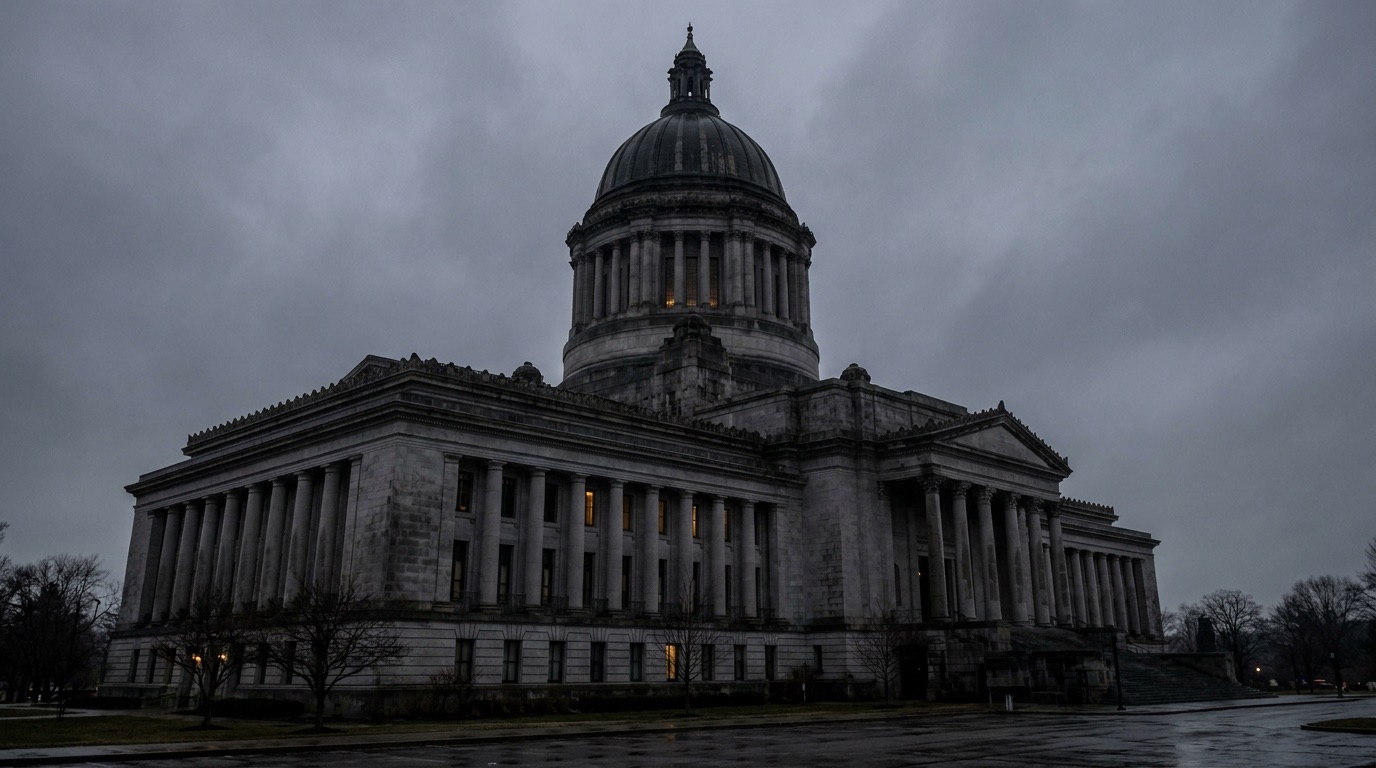
Government funding does not run out until 30 September. The Senate wrote its replacement anyway, and the reason is on the calendar rather than in the ledger: a shutdown fight in the weeks before a midterm election is a risk neither party wanted to carry.
The measure is a continuing resolution, which means it extends existing spending levels rather than setting new ones. It runs to 11 December — a week further than the version the House passed last month, and about ten weeks into the next fiscal year. A procedural vote was set for Monday evening, with the bill expected to clear before the August recess.
The headline is dull by design. What matters is underneath it, because a stopgap is one of the few places where Congress can adjust what the executive branch is allowed to do with money it has already been given.
Three of those adjustments are worth naming. A rule requiring senior political appointees to sign off on federal grants is frozen until 11 December. New transfers of funding into Border Patrol are prohibited, closing a route the House version had left open. And a White House request for roughly a billion dollars toward a new class of battleships did not make it in.
The administration did not come away empty. The bill carries increases for defence, funding for FBI preparation ahead of the 2028 Olympics, authority to accelerate Navy shipbuilding, and permission to repurpose Housing Choice Voucher money toward rental assistance. Appropriations chair Susan Collins and ranking member Patty Murray negotiated the package; Senator John Kennedy has voiced objections, and the leadership expects some Republican votes against.
Democrats also lost arguments. An extension of the infrastructure law's advance appropriations, worth around $36.8 billion a year, was rejected. So was an attempt to restrict so-called pocket rescissions, the practice of running out the clock on funds rather than spending them.
Minority leader Chuck Schumer's public backing was the signal that decided the arithmetic. A continuing resolution needs sixty votes, which means it needs Democrats, and his position told his caucus the deal was acceptable.
It is worth being precise about what a continuing resolution is not. It does not decide how much any agency gets for the year; it holds last year's numbers in place and buys time. Twelve annual appropriations bills still have to pass, and none of the disputes that stopped them has been resolved. Congress has now written short-term patches often enough that the practice has become the normal way federal money is authorised, which is a slower story than a shutdown but a more consequential one.
The part worth marking on a calendar is what the bill does not settle. Freezing the grant-approval rule until 11 December does not resolve it; it moves the argument to December, when the same negotiators will be back at the same table with an expiring bill and a fresh election result behind them. Surface transportation reauthorisation, stalled since May, is still waiting its turn.
Key takeaways
See full context →A stopgap funds the government to 11 December, written early to avoid a shutdown fight before the midterms.
Six outlets report the date and the terms consistently, with the provision-level detail from congressional specialist reporting.
The frozen grant rule and the unfinished appropriations return in December, after the election.
Source map
Explore all sources →✓What we know
- The stopgap extends current funding levels to 11 December, a week beyond the House version.
- Current funding does not expire until 30 September; the Senate acted early to avoid a pre-election shutdown.
- A rule requiring political appointees to approve federal grants is blocked until 11 December.
- New funding transfers to Border Patrol are prohibited.
- Senate Minority Leader Chuck Schumer publicly backed the bill, effectively securing the sixty votes needed.
?What remains unclear
See full context- The final vote count is not known; some Republicans, including Senator John Kennedy, have objected.
- Nothing in the bill resolves the grant-approval dispute — it postpones it to December.
- Whether full-year appropriations will be completed before the new deadline is unresolved.
Every factual claim, and what supports it
Each statement in this article is listed with how it is classified and which of the sources below establish it. A verified fact is corroborated by two or more independent sources; a reported claim rests on fewer, or on a single party’s account.
The stopgap would fund the government through 11 December 2026.
Date reported consistently by Roll Call, the Washington Times and UPI.Current funding authority does not expire until 30 September 2026.
Both outlets note the Senate acted ahead of the deadline.A rule requiring senior political appointees to approve federal grants is blocked until 11 December.
Provision detail from Roll Call; the policy outlet covering the same text reports the provisions package.The bill prohibits new transfers of funding to Border Patrol.
Roll Call describes this as closing a loophole left by the House version.A White House request for about $1 billion for a new battleship class was excluded.
Reported by Roll Call.An extension of infrastructure law advance appropriations, around $36.8 billion a year, was rejected.
Reported by Roll Call.The bill includes defence increases, FBI funding for the 2028 Olympics and Navy shipbuilding authority.
Listed by Roll Call; the Washington Post covers the same package.Senator Chuck Schumer publicly supported the bill.
A statement by the senator, reported by Benzinga and referenced by Roll Call.Susan Collins and Patty Murray led the negotiation; John Kennedy raised objections.
Named in Roll Call; UPI reports the appropriators' agreement.The timing is driven by the midterm calendar rather than by the funding deadline.
Both outlets attribute the early action to election timing; no sponsor has stated this as the reason.The December expiry sets up a repeat of the same dispute after the election.
Roll Call notes the freeze triggers another December fight; the Washington Post frames the timing against the election.
How the story developed
- The House passes a narrower stopgap running to 4 December.
- Negotiations on the Senate version run late.
- The Senate text is released; Schumer signals support.
- A procedural vote is scheduled ahead of the August recess.
- Current funding authority would otherwise expire.
- The stopgap expires and the grant-rule freeze lifts.
Why this framing matters
Stopgap coverage usually stops at whether a shutdown was avoided. The more durable question is what the bill changes about executive spending discretion, because those provisions outlast the news cycle and set the terms of the next fight. This summary separates the provisions multiple outlets confirm from the vote outcome, which had not happened at the time of writing.
6 sources reviewed
Every source used in this summary, grouped by its role in the reporting chain.
- 1Roll CallIndependent · 2026-08-02Independent
- 2The Washington PostIndependent · 2026-08-03Independent
- 3UPIIndependent · 2026-08-03Independent
- 4The Washington TimesIndependent · 2026-08-02Independent
- 5E&E News by POLITICOIndependent · 2026-08-02Independent
- 6BenzingaClaim source · 2026-08-02Claim source
How we verified this story
Assembled from six outlets: congressional specialist reporting (Roll Call), two national papers, a wire service, a policy outlet covering the environment provisions, and one report of a senator's own statement, which is labelled as a claim rather than a finding. Provision-level detail — the grant rule, the Border Patrol prohibition, the battleship request and the infrastructure extension — comes from Roll Call and was checked for consistency against the others. The legislative text and the Senate Appropriations Committee release were sought as primary sources and returned access errors to automated retrieval, so no claim here rests on a primary document, and none is cited as though it had been read. No vote had been held when this was written.
Updates and corrections
Preview page created.
Source context and unresolved questions updated.
Related stories and more context
 BUSINESS
AI capex in 2026: the headline totals range from $630bn to $800bn, and the gap is who gets counted
Published estimates for hyperscaler AI spending this year differ by nearly $200 billion. The disagreement is not about the companies' plans — it is about how many companies are in the set, and which baseline year the growth is measured from.
 SCIENCE
Does El Niño mean more snow? Seasonal outlooks cannot answer that, and here is why
The maps people check for a snow answer measure precipitation, which combines rain and melted snow into one number. They cannot separate the two. That is a built-in limitation of the product, not a gap someone forgot to fill.
 TECHNOLOGY
Will AI take my job? The measured effect is real, narrow, and concentrated on people under 26
The clearest evidence so far comes from payroll records, not forecasts. It shows a 16 per cent relative employment decline for 22- to 25-year-olds in the most exposed occupations — and growth where AI augments the work instead of replacing it.
Join the discussion
Help build a clearer picture. Add context, challenge a claim or share a source.