Nauru is now Naoero, and the change went through parliament rather than a vote
The Pacific state has adopted its own-language name by constitutional amendment. A referendum was skipped, the country code changes, and a separate diplomatic reversal landed the same fortnight.
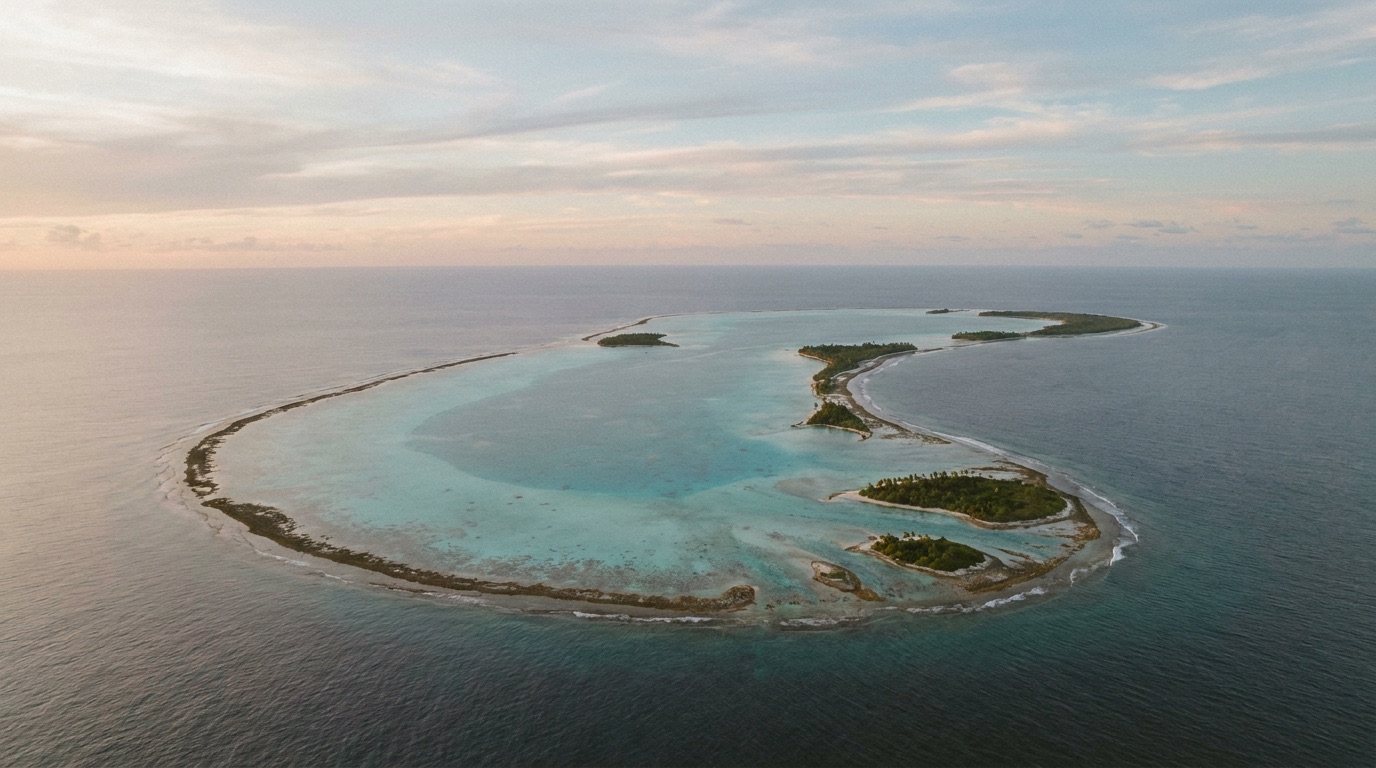
The Pacific nation known internationally as Nauru has formally adopted its name in its own language. The country is now the Republic of Naoero, closing a gap between what its people have always called the island and what the rest of the world wrote down.
President David Adeang put the proposal to parliament in January 2026. Rather than a public vote, the government took the constitutional route, which required lawmakers to pass the amendment in two separate rounds. Officials concluded after extended internal discussion that a referendum was not necessary — a decision that makes this a parliamentary act rather than a popular one, and the detail most likely to be argued over at home.
The practical consequences reach further than a label. The three-letter country code moves from NRU to NRO, and the word for the people changes from Nauruan to dei-Naoero. Every database, passport series, sporting federation and treaty index that carries the old form now has to be updated, and each of those bodies moves on its own timetable.
The name itself is not new. Naoero is what the island is called in the national language; the spelling the world adopted came from foreign speakers who found the original difficult, making the familiar version a matter of convenience rather than choice. Roughly 12,000 people live on the island, which makes it one of the smallest states on earth and the smallest to have taken a step like this in recent memory.
Recognition is already arriving in practice rather than only on paper. On 29 July, Australia named Lisa White as its High Commissioner and titled the post to the Republic of Naoero, using the new form in an official appointment. Canberra frames the relationship through a treaty it describes as an integrated economic, social and security partnership.
A second decision landed in the same fortnight. The government withdrew its recognition of Abkhazia and South Ossetia and ended diplomatic relations with both, reversing a position held since 2009. Georgia's foreign ministry, which disclosed that the decision was taken on 21 July, attributed it to respect for international law and said it was ready to open relations. Whether the two moves are connected has not been explained by either government.
The diplomatic reversal is the larger of the two decisions. Only five UN member states had recognised the two territories, the others being Russia, Nicaragua, Venezuela and Syria, so the withdrawal narrows an already short list. Two other Pacific states, Vanuatu and Tuvalu, made the same reversal in 2011, which places this move in a regional pattern rather than treating it as an isolated one. Georgia said it is ready to open relations.
Australia's appointment gives some sense of what recognition looks like day to day. The incoming High Commissioner, Lisa White, is a career diplomat with more than two decades of service and previous postings in Papua New Guinea, Egypt and Afghanistan, and she replaces Matthew Barclay, in post since 2025. Canberra has given the partnership a name in the national language, Ata Amin Bwini, rendered as we are family.
What is not yet settled is the paperwork. Reporting on the parliamentary vote noted it was not immediately clear whether the constitutional document itself had been formally amended, and the government is still working to have the new name and country code accepted by other states and international institutions. Until those registries change, Naoero and Nauru will both be in circulation, and readers will meet both spellings depending on which body last updated its records.
Key takeaways
See full context →Nauru is officially the Republic of Naoero, adopted through parliament without a public vote.
Six independent outlets, including AP, Reuters, RNZ and Al Jazeera, report the change consistently.
Formal amendment of the constitutional document and international adoption of the NRO code are still outstanding.
Source map
Explore all sources →✓What we know
- The official name is the Republic of Naoero, reported consistently by AP, Reuters, RNZ and Al Jazeera.
- The route was a constitutional amendment passed in two parliamentary rounds, proposed by President David Adeang in January 2026.
- No referendum was held; the government concluded one was not required.
- The country code becomes NRO and the demonym becomes dei-Naoero.
- Australia has already used the new name in an official diplomatic appointment.
?What remains unclear
See full context- Whether the constitutional document itself has been formally amended is not confirmed.
- When the UN, ISO and other institutions will adopt the new name and country code is unknown.
- Whether the withdrawal of recognition from Abkhazia and South Ossetia is connected to the name change has not been explained by either government.
Every factual claim, and what supports it
Each statement in this article is listed with how it is classified and which of the sources below establish it. A verified fact is corroborated by two or more independent sources; a reported claim rests on fewer, or on a single party’s account.
The country's official name is now the Republic of Naoero.
Reported independently by AP, RNZ, Al Jazeera and Reuters.President David Adeang proposed the change to parliament in January 2026.
Named and dated in AP reporting.The change was made by constitutional amendment requiring two rounds of parliamentary voting.
AP describes the two-round parliamentary process.No referendum was held; the government judged one unnecessary after extended discussion.
AP reports the government's reasoning; RNZ's headline records the referendum was bypassed.The country code changes from NRU to NRO and the demonym from Nauruan to dei-Naoero.
Both changes specified in AP reporting.About 12,000 people live in the country.
Population figure given by AP.Australia appointed Lisa White as High Commissioner to the Republic of Naoero on 29 July 2026.
Appointment and title recorded by Islands Business.The government withdrew recognition of Abkhazia and South Ossetia, reversing a 2009 position.
Reported by PINA; the stated reason is attributed to Georgia's foreign ministry rather than to Naoero.It is not confirmed that the constitutional document itself has been formally amended.
AP explicitly flags this as unclear.Only five UN member states had recognised Abkhazia and South Ossetia; Vanuatu and Tuvalu withdrew in 2011.
Context supplied by PINA.Australia describes the bilateral treaty as an integrated economic, social and security partnership.
Characterisation reported by Islands Business.Any link between the name change and the withdrawal of recognition is unestablished.
Neither government has explained a connection; the sources do not assert one.
How the story developed
- Recognition extended to Abkhazia and South Ossetia.
- President David Adeang proposes the name change to parliament.
- Decision taken to withdraw recognition of Abkhazia and South Ossetia.
- Australia appoints a High Commissioner to the Republic of Naoero.
- RNZ reports the change proceeded without a referendum.
- International coverage confirms the change; the diplomatic withdrawal is announced.
Why this framing matters
Coverage of small-state news often stops at the novelty of the headline. The substantive questions here are constitutional and administrative: the amendment passed through parliament rather than a referendum, and international registries have not yet caught up. This summary separates what multiple outlets confirm from what remains procedurally open, and does not treat the two July decisions as related in the absence of any statement to that effect.
6 sources reviewed
Every source used in this summary, grouped by its role in the reporting chain.
- 1Associated Press (via ABC News)Primary · 2026-08-03Primary
- 2RNZ PacificIndependent · 2026-07-29Independent
- 3Al JazeeraIndependent · 2026-07-31Independent
- 4Pacific Islands News AssociationClaim source · 2026-07-31Claim source
- 5Islands BusinessIndependent · 2026-07-29Independent
- 6Reuters (via Free Malaysia Today)Independent · 2026-07-31Independent
How we verified this story
Assembled from six independent outlets located through the GDELT DOC 2.0 API and Google Trends: two international wires (AP, Reuters), two broadcasters (RNZ Pacific, Al Jazeera) and two regional Pacific publications (PINA, Islands Business). Details of the parliamentary process, the country code and the population figure were taken from AP reporting and cross-checked for consistency against the other five. RNZ's page returned an access error, so it is cited for its headline and link only and no claim rests on it alone. No government statement was obtained directly, and no source text was reproduced.
Updates and corrections
Preview page created.
Source context and unresolved questions updated.
Related stories and more context
 BUSINESS
AI capex in 2026: the headline totals range from $630bn to $800bn, and the gap is who gets counted
Published estimates for hyperscaler AI spending this year differ by nearly $200 billion. The disagreement is not about the companies' plans — it is about how many companies are in the set, and which baseline year the growth is measured from.
 SCIENCE
Does El Niño mean more snow? Seasonal outlooks cannot answer that, and here is why
The maps people check for a snow answer measure precipitation, which combines rain and melted snow into one number. They cannot separate the two. That is a built-in limitation of the product, not a gap someone forgot to fill.
 TECHNOLOGY
Will AI take my job? The measured effect is real, narrow, and concentrated on people under 26
The clearest evidence so far comes from payroll records, not forecasts. It shows a 16 per cent relative employment decline for 22- to 25-year-olds in the most exposed occupations — and growth where AI augments the work instead of replacing it.
Join the discussion
Help build a clearer picture. Add context, challenge a claim or share a source.