How much energy does one AI prompt use? The only measured figure comes from Google, and it is 0.24 watt-hours
OpenAI has published nothing comparable for ChatGPT. The one production measurement in the public record is Google's, for a median Gemini text prompt — and it is small enough that the interesting number is not per-prompt at all.
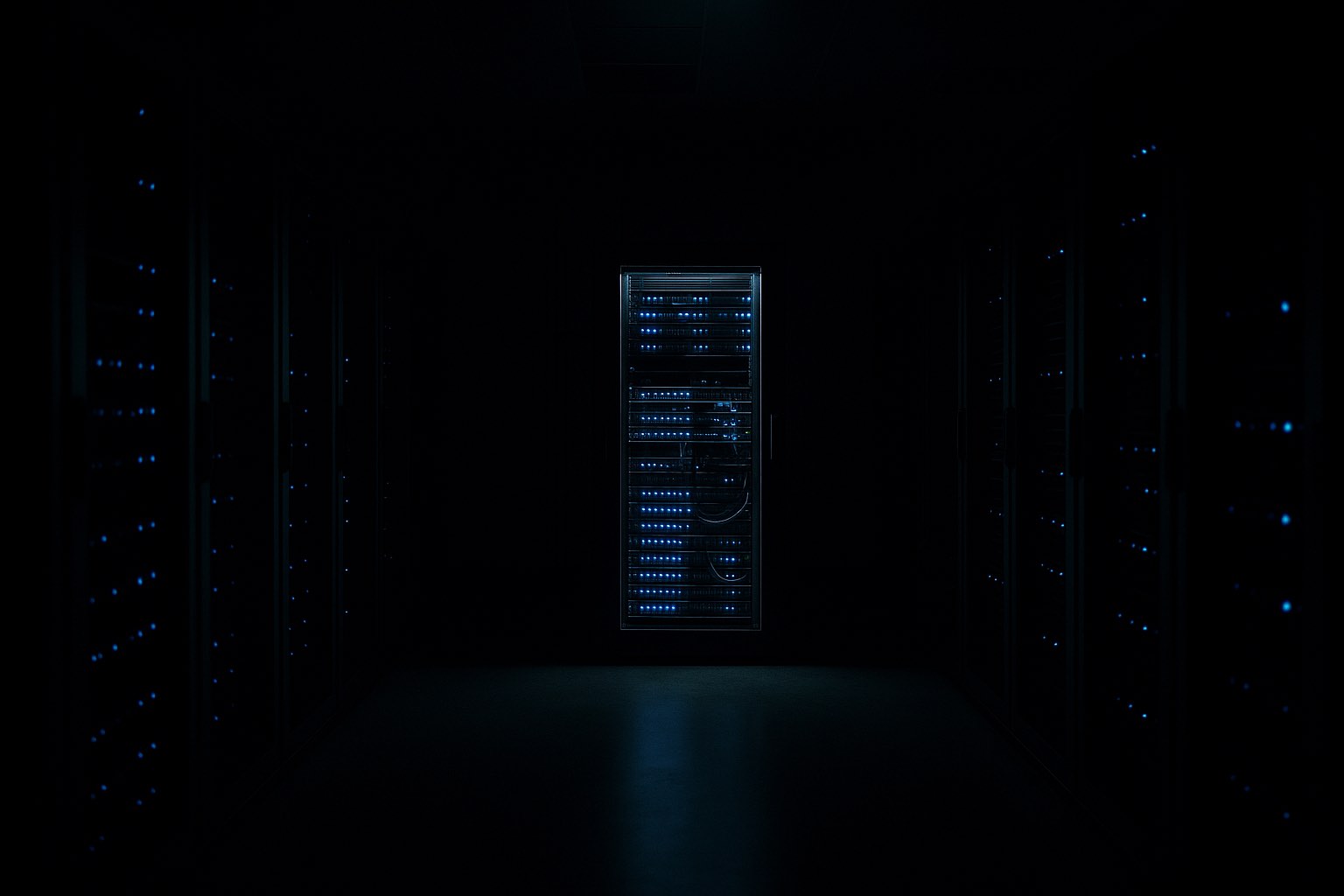
In August 2025 Google published a technical paper measuring its own production systems and reported that the **median Gemini text prompt consumes 0.24 watt-hours of energy** — along with 0.26 millilitres of water.
That is the figure to start from, with two conditions attached immediately.
It is a **median**, not an average and not a maximum. Prompt cost varies enormously with the length of the output, whether the model reasons before answering, and whether images or video are involved. A median text prompt is the middle of a distribution with a long tail to the right.
And it is **Google measuring Google**. It covers Gemini on Google's own hardware in Google's own datacentres. OpenAI has published no comparable figure for ChatGPT, which means anyone quoting a per-prompt energy cost for ChatGPT specifically is extrapolating from someone else's infrastructure.
To make 0.24 watt-hours concrete: it is roughly what a 60-watt bulb draws in about fifteen seconds. Running a thousand such prompts consumes about 0.24 kilowatt-hours — less than a typical clothes dryer cycle.
Which is why the per-prompt number, though it is the one everyone asks for, is not where the significance sits.
The aggregate is a different object. The International Energy Agency puts total data centre electricity demand at roughly **460 to 490 terawatt-hours in 2025**, growing about 17 per cent that year, with consumption at AI-focused facilities specifically rising around 50 per cent. Data centres overall account for just over **1 per cent of global electricity** and about **0.5 per cent of global CO2 emissions**.
In the United States the share is higher: around **4 per cent of national electricity in 2023**, with Lawrence Berkeley National Laboratory projecting **7 to 12 per cent by 2028**.
So both of these are true at once. A single prompt is trivial. The aggregate is a measurable and fast-growing share of national electricity. There is no contradiction — it is what happens when a very small unit cost is multiplied by an extremely large and rising number of units, and concentrated into a small number of physical locations.
That concentration is the part per-prompt arithmetic hides completely. A national percentage says nothing about which grid absorbs the load. The IEA estimates Irish data centres could reach around a third of that country's electricity, which is a different problem entirely from 1 per cent globally.
Two things remain genuinely unresolved. Efficiency is improving quickly and demand is growing quickly, and which wins over a decade is not established by any of the figures above. And no independent party can verify Google's measurement — it is a company disclosure about its own systems, which does not make it wrong but does make it something other than an independent finding.
Key takeaways
See full context →Google measured a median Gemini text prompt at 0.24 watt-hours. No comparable figure exists for ChatGPT.
Data centres are just over 1% of global electricity and about 4% of US electricity in 2023, projected 7-12% by 2028.
The per-prompt cost is trivial; the aggregate and its geographic concentration are not.
Source map
Explore all sources →✓What we know
- Google reported in August 2025 that a median Gemini text prompt uses 0.24 watt-hours and 0.26 millilitres of water.
- The figure is a median for text prompts on Google's own infrastructure.
- OpenAI has published no comparable per-prompt energy figure for ChatGPT.
- The IEA puts global data centre electricity demand at roughly 460-490 TWh in 2025, up about 17 per cent.
- Data centres account for just over 1 per cent of global electricity and about 0.5 per cent of global CO2 emissions.
- US data centres used about 4 per cent of national electricity in 2023, projected to 7-12 per cent by 2028.
?What remains unclear
See full context- Google's figure is self-reported and cannot be independently verified.
- No per-prompt energy figure exists for ChatGPT, so any quoted for it is extrapolated from other infrastructure.
- A median text prompt does not describe reasoning, image or video workloads, which cost substantially more.
- Whether efficiency gains outpace demand growth over a decade is not established.
- National and global percentages say nothing about which local grids absorb the load.
Every factual claim, and what supports it
Each statement in this article is listed with how it is classified and which of the sources below establish it. A verified fact is corroborated by two or more independent sources; a reported claim rests on fewer, or on a single party’s account.
Google reported a median Gemini text prompt at 0.24 watt-hours and 0.26 millilitres of water in August 2025.
Published by Google and reported independently.Google's figure covers its own infrastructure and is self-reported.
Scope and provenance stated in coverage of the paper.OpenAI has published no comparable per-prompt energy figure for ChatGPT.
No such figure was located; stated as an absence rather than a finding.Global data centre electricity demand was roughly 460-490 TWh in 2025, up about 17 per cent.
IEA estimate for 2025.Data centres account for just over 1 per cent of global electricity and about 0.5 per cent of CO2 emissions.
IEA figures corroborated in independent analysis.US data centres used about 4 per cent of national electricity in 2023, projected to 7-12 per cent by 2028.
Lawrence Berkeley National Laboratory analysis, widely corroborated.A median text prompt does not describe reasoning, image or video workloads.
Stated as a limit of the median measure rather than a measured comparison.
How the story developed
- US data centres account for about 4 per cent of national electricity.
- Google publishes 0.24 Wh and 0.26 ml for a median Gemini text prompt.
- Global data centre demand reaches roughly 460-490 TWh, up about 17 per cent.
- Berkeley Lab projects US data centre share at 7-12 per cent of national electricity.
Why this framing matters
The per-prompt figure is what people search for and it is the least informative number in the story. It is small, it is a median from one company measuring itself, and it does not exist at all for the product most readers have in mind. The article gives it accurately with its conditions and then moves to the aggregate and the geographic concentration, which is where the measurable effect actually is.
5 sources reviewed
Every source used in this summary, grouped by its role in the reporting chain.
- 1Data Center DynamicsIndependent · 2025-08Independent
- 2International Energy AgencyPrimary · 2025Primary
- 3Lawrence Berkeley National LaboratoryPrimary · 2024Primary
- 4Carbon BriefIndependent · 2025Independent
- 5ForbesIndependent · 2026-07-21Independent
How we verified this story
The per-prompt figure is attributed to Google as a company disclosure rather than presented as an independent measurement, and its status as a median for text prompts is stated. No ChatGPT figure is given, because none has been published. Aggregate figures are attributed to the IEA and Lawrence Berkeley National Laboratory with their base years, and projections are labelled as projections.
Updates and corrections
Preview page created.
Source context and unresolved questions updated.
Related stories and more context
 BUSINESS
AI capex in 2026: the headline totals range from $630bn to $800bn, and the gap is who gets counted
Published estimates for hyperscaler AI spending this year differ by nearly $200 billion. The disagreement is not about the companies' plans — it is about how many companies are in the set, and which baseline year the growth is measured from.
 SCIENCE
Does El Niño mean more snow? Seasonal outlooks cannot answer that, and here is why
The maps people check for a snow answer measure precipitation, which combines rain and melted snow into one number. They cannot separate the two. That is a built-in limitation of the product, not a gap someone forgot to fill.
 TECHNOLOGY
Will AI take my job? The measured effect is real, narrow, and concentrated on people under 26
The clearest evidence so far comes from payroll records, not forecasts. It shows a 16 per cent relative employment decline for 22- to 25-year-olds in the most exposed occupations — and growth where AI augments the work instead of replacing it.
Join the discussion
Help build a clearer picture. Add context, challenge a claim or share a source.