Are data centres bad for the environment? The global numbers say one thing, the local ones say another
Data centres account for just over 1 per cent of world electricity and about 0.5 per cent of CO2 emissions. In Ireland the figure approaches a third of national supply. Both are true, and the gap between them is the entire argument.
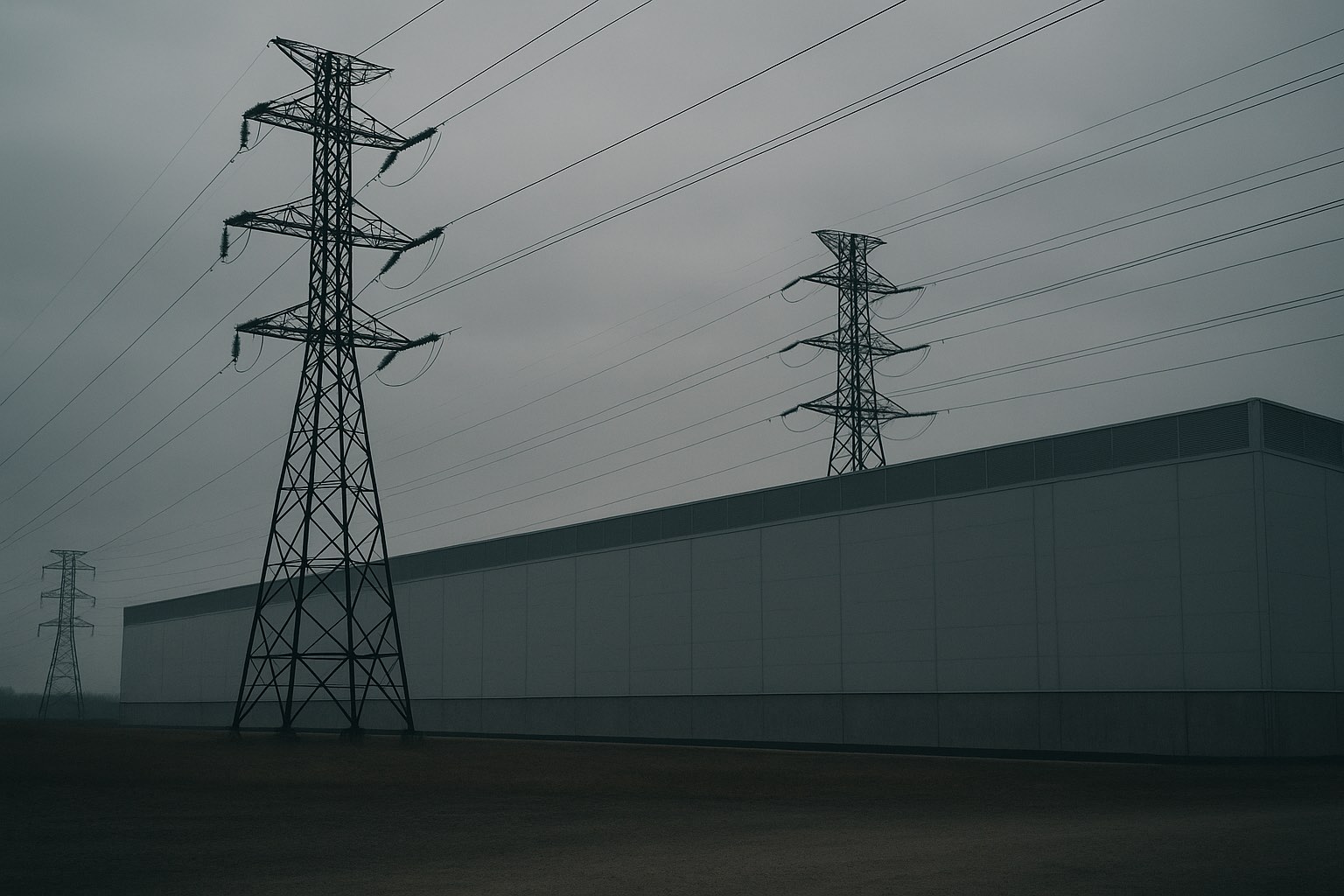
The honest answer to whether data centres are bad for the environment is that it depends almost entirely on where you are standing, and that the two sides of this argument are usually citing figures at completely different scales.
Start with the global picture, because it is the one that surprises people. According to the International Energy Agency, data centres account for **just over 1 per cent of global electricity demand** and roughly **0.5 per cent of global CO2 emissions**. At planetary scale, that is not what is driving climate change. Anyone telling you AI is boiling the oceans is not working from these numbers.
The trajectory is steeper than the level, though. Global data centre electricity demand reached roughly 460 to 490 terawatt-hours in 2025 and grew 17 per cent that year. Consumption at AI-focused facilities specifically rose about 50 per cent. The IEA projects total demand roughly doubling by 2030, with associated emissions reaching around 350 million tonnes by 2035 — which would still be about 2 per cent of electricity-sector emissions.
Now change the scale, and the picture inverts.
In the United States, data centres used around **4 per cent of national electricity in 2023**, and Lawrence Berkeley National Laboratory analysis projects **7 to 12 per cent by 2028**. That is a national figure absorbing a very uneven distribution. Northern Virginia, parts of Texas and the Phoenix area face grid expansion costs that a globally-averaged percentage renders invisible.
Ireland is the clearest case. The IEA estimates data centres could reach **32 per cent of Irish electricity** — close to a third of a national grid, in a country whose entire consumption is a rounding error globally. Nothing about the 1 per cent global figure prepares you for that.
This is why the two camps talk past each other. The defenders cite global shares, which are genuinely small. The critics cite local grids, transmission queues and county-level water withdrawals, which are genuinely strained. Neither is lying. They are describing different objects.
The pattern repeats on water. Per-query water use is measured in millilitres under every current published estimate, including the one its own author revised downward — and a facility with a modest per-query footprint sited in a water-stressed county is still a local problem. Small unit costs multiplied by concentrated siting is the whole shape of this issue.
So the useful version of the question is not whether data centres are bad for the environment in the abstract. It is: what does this specific facility draw, from which grid, from which watershed, and who pays for the transmission built to serve it. Those have answers. They are just answers that vary by county rather than by industry.
One thing worth separating out: grid expansion costs and residential electricity bills are related but not the same claim. Utilities in high-concentration regions face material costs to serve new load. How much of that reaches household bills depends on rate cases, tariff design and who regulators decide should carry it — and that is a jurisdiction-by-jurisdiction determination, not a settled fact. Coverage that jumps straight from data centre growth to your bill going up is skipping the step where that gets decided.
Every figure above is a projection past its base year. The IEA's own numbers are scenario-dependent, and Berkeley's 7 to 12 per cent range is wide because the underlying build-out is uncertain. Treat the direction as well supported and the specific destination as not yet settled.
Key takeaways
See full context →Data centres are just over 1 per cent of global electricity and about 0.5 per cent of CO2 emissions, but approach a third of Irish supply. Concentration, not aggregate, is the issue.
US data centres used about 4 per cent of national electricity in 2023; Berkeley Lab projects 7-12 per cent by 2028.
Whether grid expansion costs reach household bills is decided in rate cases, not by data centre growth itself.
Source map
Explore all sources →✓What we know
- The IEA puts data centres at just over 1 per cent of global electricity demand and about 0.5 per cent of global CO2 emissions.
- Global data centre electricity demand was roughly 460-490 TWh in 2025 and grew about 17 per cent that year.
- Electricity consumption at AI-focused data centres rose about 50 per cent in 2025.
- US data centres used around 4 per cent of national electricity in 2023, with Lawrence Berkeley National Laboratory projecting 7-12 per cent by 2028.
- The IEA estimates Irish data centres could reach about 32 per cent of national electricity by 2026.
- Northern Virginia, parts of Texas and the Phoenix area face material grid expansion costs from data centre growth.
?What remains unclear
See full context- All figures beyond the base years are projections and depend on build-out scenarios that are not settled.
- The Berkeley Lab range of 7-12 per cent by 2028 is wide precisely because the underlying construction is uncertain.
- How much of the grid expansion cost reaches residential electricity bills is determined in individual rate cases and is not established.
- Facility-level withdrawals and emissions are rarely disclosed, so county-level impact usually cannot be verified from public data.
- How much efficiency improvement will offset demand growth is not established.
Every factual claim, and what supports it
Each statement in this article is listed with how it is classified and which of the sources below establish it. A verified fact is corroborated by two or more independent sources; a reported claim rests on fewer, or on a single party’s account.
Data centres account for just over 1 per cent of global electricity demand.
IEA figure, corroborated in independent analysis.Data centres account for roughly 0.5 per cent of global CO2 emissions.
IEA figure, corroborated independently.Global data centre electricity demand reached roughly 460-490 TWh in 2025.
IEA estimate for 2025.Global data centre electricity demand grew about 17 per cent in 2025 and AI-focused demand about 50 per cent.
Growth rates attributed to the IEA.US data centres used around 4 per cent of national electricity in 2023.
Lawrence Berkeley National Laboratory analysis, widely corroborated.Berkeley Lab projects US data centre electricity share at 7-12 per cent by 2028.
Projection with a stated range; reported as a projection.The IEA estimates Irish data centres could reach about 32 per cent of national electricity by 2026.
IEA country estimate, reported as an estimate.IEA projections put data centre emissions around 350 million tonnes by 2035, about 2 per cent of electricity-sector emissions.
Scenario-dependent projection.Northern Virginia, parts of Texas and the Phoenix area face material grid expansion costs from data centre growth.
Regional concentration identified in energy analysis.Whether grid expansion costs reach residential bills is determined in rate cases and is not established.
Sources establish utility costs but not the pass-through to households; stated as unresolved.
How the story developed
- US data centres account for about 4 per cent of national electricity.
- Global data centre electricity demand reaches roughly 460-490 TWh, up about 17 per cent; AI facilities up about 50 per cent.
- IEA estimates Irish data centres could reach about 32 per cent of national electricity.
- Berkeley Lab projects US data centre share at 7-12 per cent of national electricity.
- IEA projects data centre emissions around 350 million tonnes, about 2 per cent of electricity-sector emissions.
Why this framing matters
Both sides of this argument cite real figures at incompatible scales, which is why it never resolves. A global share just above 1 per cent and an Irish share near a third are both accurate; they describe different objects. The article states both rather than picking the one that supports a conclusion, and separates grid expansion costs from household bills, which coverage routinely merges. It also flags that everything past the base years is a projection.
5 sources reviewed
Every source used in this summary, grouped by its role in the reporting chain.
- 1International Energy AgencyPrimary · 2025Primary
- 2Lawrence Berkeley National LaboratoryPrimary · 2024Primary
- 3Carbon BriefIndependent · 2025Independent
- 4Our World in DataIndependent · 2025Independent
- 5Brookings InstitutionIndependent · 2025Independent
How we verified this story
Global figures are attributed to the IEA and US figures to Lawrence Berkeley National Laboratory, each with its base year, because the two are frequently mixed. Projections are labelled as projections throughout and the width of the Berkeley range is stated rather than averaged into a single number. The claim that data centre growth raises household bills is deliberately not made: the sources support grid expansion costs, and the step from there to residential rates is a regulatory determination the sources do not establish.
Updates and corrections
Preview page created.
Source context and unresolved questions updated.
Related stories and more context
 BUSINESS
AI capex in 2026: the headline totals range from $630bn to $800bn, and the gap is who gets counted
Published estimates for hyperscaler AI spending this year differ by nearly $200 billion. The disagreement is not about the companies' plans — it is about how many companies are in the set, and which baseline year the growth is measured from.
 SCIENCE
Does El Niño mean more snow? Seasonal outlooks cannot answer that, and here is why
The maps people check for a snow answer measure precipitation, which combines rain and melted snow into one number. They cannot separate the two. That is a built-in limitation of the product, not a gap someone forgot to fill.
 TECHNOLOGY
Will AI take my job? The measured effect is real, narrow, and concentrated on people under 26
The clearest evidence so far comes from payroll records, not forecasts. It shows a 16 per cent relative employment decline for 22- to 25-year-olds in the most exposed occupations — and growth where AI augments the work instead of replacing it.
Join the discussion
Help build a clearer picture. Add context, challenge a claim or share a source.